I've had two renewal conversations this month that could not have gone more differently.
One client called me nervous, bracing for bad news. Her payment is dropping. Another client walked in relaxed, assuming his renewal would be routine. His payment is about to jump by almost 40%.
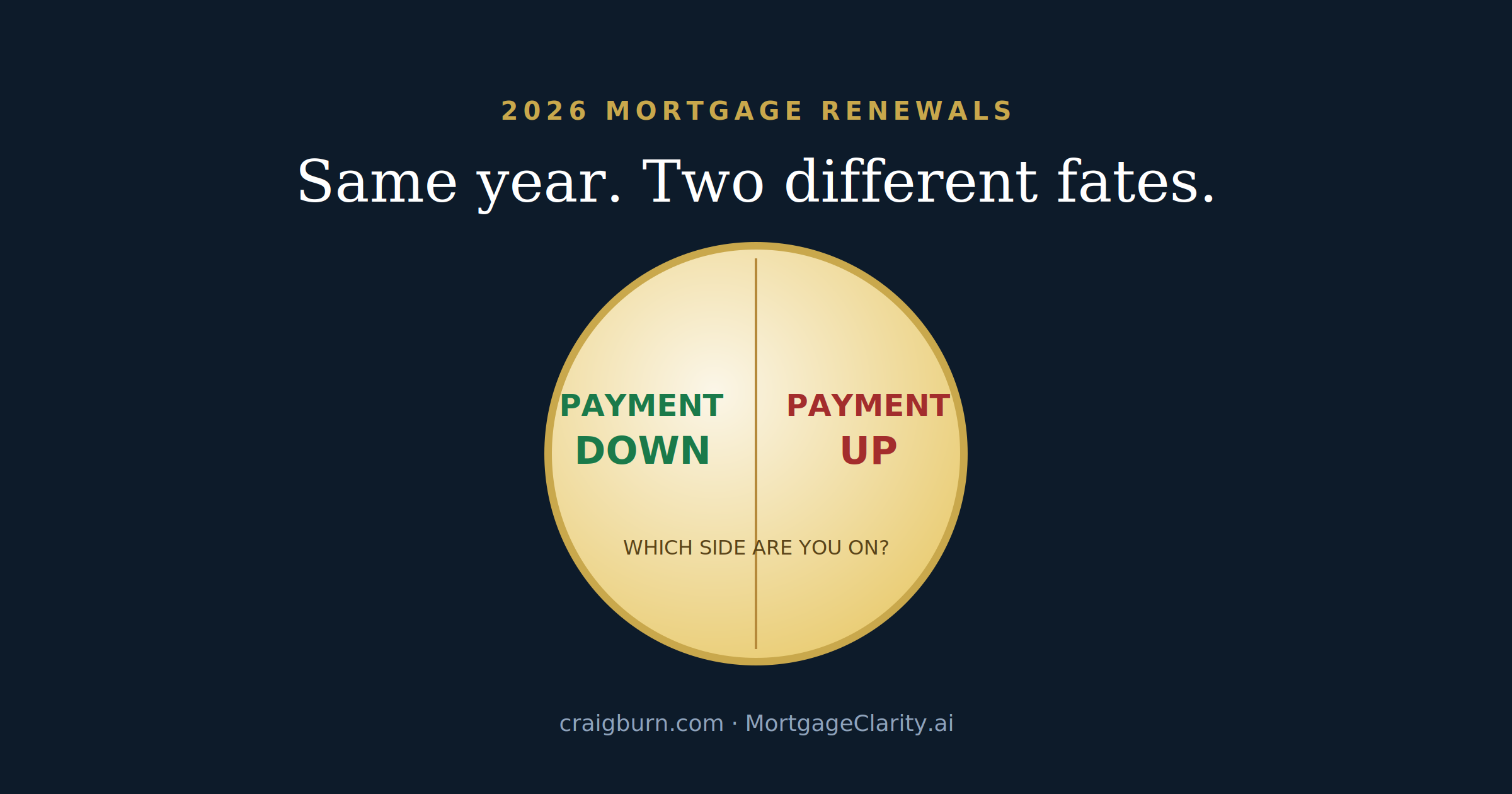
Neither of them saw it coming, in either direction. And that's the part nobody's talking about with mortgage renewals in 2026 — it's not a slow, predictable slide in one direction. It's a split. Right now, in Canada, homeowners renewing their mortgage are landing on two very different sides of a coin flip, and most people have no idea which side they're on until the renewal letter shows up in the mail.
Why the split is happening
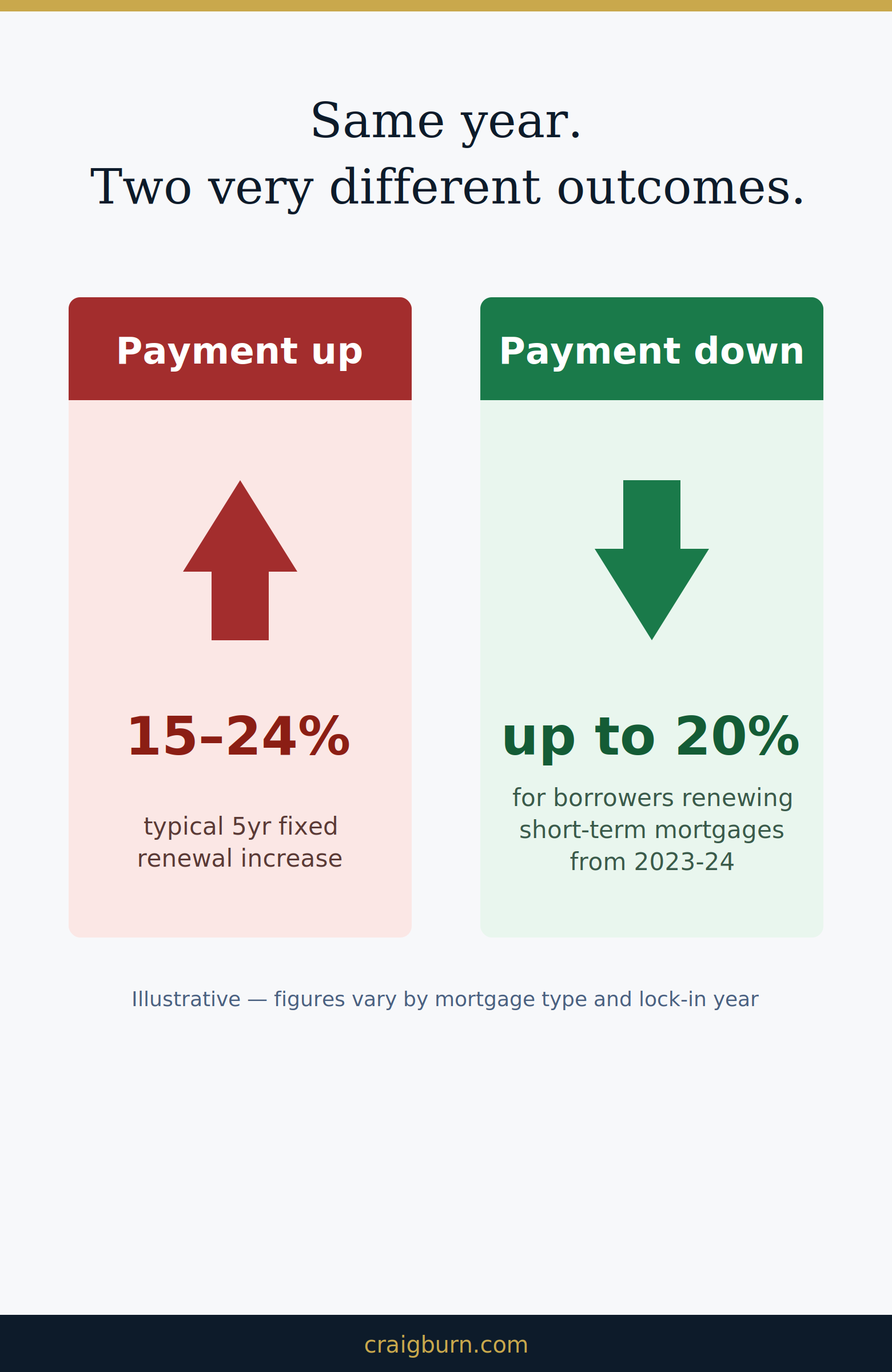
Here's the short version. If you locked into a 5-year fixed rate a few years ago — especially back when rates were near rock-bottom — you're likely renewing into something noticeably higher. The Bank of Canada estimates five-year fixed borrowers renewing in 2026 face an average payment increase of around 20%, with many landing somewhere in the 15–24% range. For a smaller group — mainly variable-rate borrowers with fixed payments, who've been absorbing rate increases without their payment moving until renewal forces the reset — that jump can hit 40% or more.
But if you went the other way — a shorter-term mortgage taken out during the 2023–24 rate-hike cycle, now rolling over into today's lower rates — you could actually be looking at a payment decrease.
Same year. Same Bank of Canada. Two completely different outcomes, depending on what kind of mortgage you signed and when you signed it.
How to tell which side you're on before the letter scares you
You don't have to wait and wonder. A few minutes can tell you almost everything:
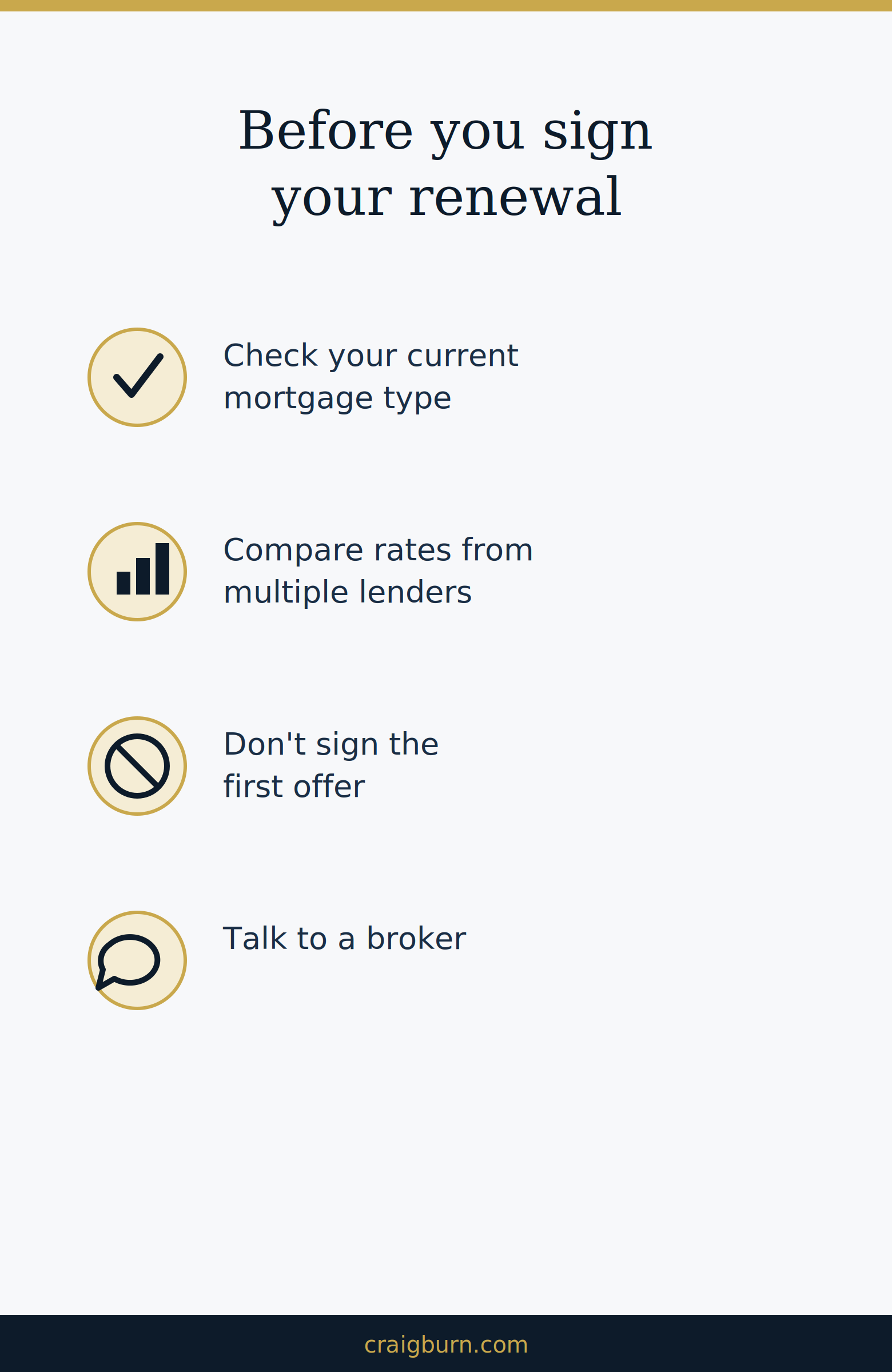
- Look at what you signed, not what you think you signed. Pull out your current mortgage documents and check: fixed or variable, and what term. This alone tells you which side of the split you're more likely on.
- Check your renewal date against your rate. If you locked in during 2020–2022 at a rate under 3%, brace yourself — that's the group facing the sharper resets. If you're coming off a shorter term from the last year or two, you may be pleasantly surprised.
- Don't sign the bank's renewal letter on reflex. Your existing lender's renewal offer is just that — their offer. It's not the market, and it's usually not their best rate. That number is a starting point for a conversation, not a final answer.
The part your bank won't tell you
Whichever side of the coin you land on, your current lender is not obligated to shop the market for you — and they won't. If your payment's going up, there may be a better rate or structure available elsewhere that softens the blow. If your payment's going down, that's still a good moment to double-check you're not leaving money on the table with a better lender fit.
This is genuinely one of those moments where a five-minute phone call before you sign anything can save you real money either way — whether that's finding a better rate, or catching an incentive from a lender currently offering solid cashback for switching, which can offset closing costs and then some.
Bottom line
Don't assume. Don't panic. And don't just sign what shows up in the mail. Whether you're bracing for a jump or hoping for a drop, take ten minutes to actually check where you stand — and if you want a second set of eyes on your renewal before you commit to anything, that's exactly the kind of conversation I have with clients every week.
Patrick Sawler
Principal Broker, Craigburn Capital